
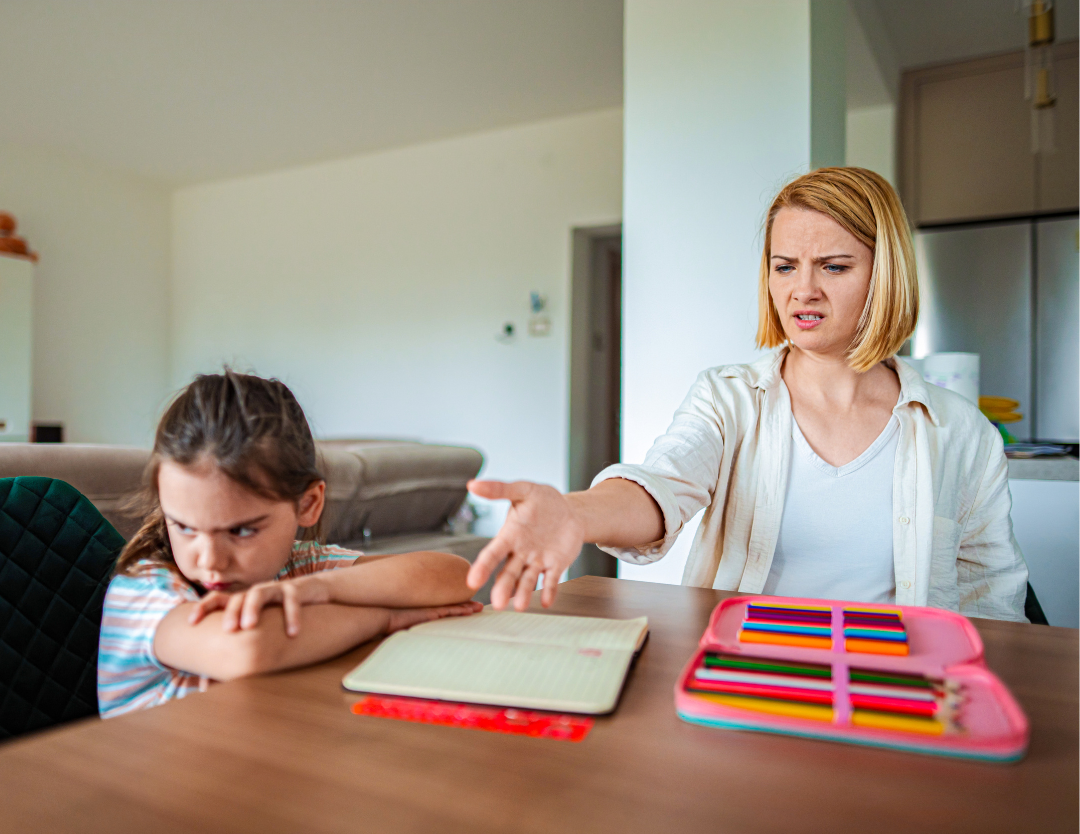

There’s a moment most homeschool moms have experienced.
You sit down at the table with your child. The math lesson is simple. The reading passage isn’t difficult. You’ve sharpened pencils, set out the books, maybe even brewed a second cup of coffee.
And within ten minutes…
Someone is crying.
Someone refuses to write.
Someone is hiding under the table.
You start wondering:
Why is this so hard?
Other families make homeschool look peaceful and beautiful.
Why does it feel like our school day turns into a meltdown marathon?
If that’s where you are, take a deep breath.
You’re not doing homeschool wrong.
Very often, the issue isn’t your teaching or the curriculum.
It’s regulation.
When Learning Feels Hard, the Nervous System May Be Overwhelmed
One of the biggest misunderstandings about children and learning is the belief that if a child can do something, they will do it.
But the brain doesn’t work that way.
Before a child can focus, remember information, write neatly, or follow instructions, their nervous system has to feel steady and organized.
We call this regulation.
When a child is regulated, their brain and body are working together. They feel safe enough to learn, think, and problem solve.
When they’re dysregulated, learning becomes much harder.
In fact, many homeschool struggles are not academic problems at all.
They’re regulation problems.

In our guide Homeschool Without Meltdowns, we talk about this idea that regulation is the bridge between emotions and learning.
If that bridge is shaky, everything on the other side — reading, writing, math, attention — becomes harder to reach.
Behavior Is Often a Signal, Not a Choice
Parents often tell us things like:
“My child melts down over small mistakes.”
“He avoids reading.”
“She can’t sit still at the table.”
But many of these behaviors are actually signals from the nervous system.
Children who are overwhelmed by sensory input or struggling with brain-body coordination may:
- Feel threatened by everyday sensory experiences
- Act out emotions they cannot yet explain or communicate
- Withdraw or “zone out” when overwhelmed
These are common signs of a nervous system that is working too hard just to stay organized.
It’s not laziness.
It’s not defiance.
It’s often the brain asking for help regulating.
The 3 Foundational Sensory Systems Behind Regulation
Children regulate their nervous systems through their sensory systems.
Many parents are familiar with the five senses, but there are actually several sensory systems that play an important role in learning.
Here are the 3 that most often impact homeschool days.
Vestibular System (Movement and Balance)
This system is located in the inner ear and helps the brain understand movement, balance, and head position. If this system is not processing well, a child may need constant movement or struggle to sit upright at the table.
Proprioceptive System (Deep Pressure / Heavy Work)
This system tells the brain where the body is in space. It uses signals from muscles and joints. Activities like pushing, pulling, carrying, climbing, or squeezing provide calming input that helps many children feel more organized.
Tactile System (Touch)
This system processes touch sensations through the skin. Some children are overly sensitive to touch and may be distracted by clothing textures, pencil grip, or even sitting in a chair.
When these sensory systems are out of sync, children can feel overwhelmed by things that seem small to adults.
And learning becomes much harder.
Sometimes the Missing Piece Is Primitive Reflexes
Another commonly overlooked piece of the puzzle is primitive reflexes.
Primitive reflexes are automatic movement patterns that babies are born with to help them survive and develop. And they are connected to the sensory systems.
Normally, these reflexes integrate (or fade away) as the brain matures.
But sometimes they remain active longer than they should.
When that happens, children may struggle with:
- Sitting still
- Eye tracking when reading
- Handwriting
- Coordination
- Emotional regulation
Our Homeschool Without Meltdowns guide explains that these reflexes can act like “unplugged brain circuits,” making learning tasks harder than they should be.
The encouraging news is that these patterns can be addressed with the right support.
Three Things You Can Do at Home
The good news is that small changes can make a big difference.
Here are three simple ways to support your child’s nervous system during homeschool.
1. Movement Before Learning
Before sitting down for lessons, help your child’s body wake up.
Try:
- Jumping Jacks
- Animal walk
- Swinging
- Carrying heavy items like books or groceries
- Jumping


Movement activates the vestibular system and proprioceptive system, helping the brain feel more organized.
Even 3–5 minutes can help.
2. Watch & Learn Your Child’s Signals
Children often show subtle signals before a meltdown.
You might notice:
- Squirming or fidgeting
- Increased mistakes
- Yawning
- Leaving their chair frequently
When you see these signs, pause.
Take a short sensory break instead of pushing through the lesson.
As we often tell parents: Regulation comes before education.
3. Build Sensory Supports into Your Homeschool Rhythm

Regulation tools don’t have to interrupt your day.
They can become part of your routine.
For example:
- Laying down to read
- Chewy or crunchy snacks during Math
- A wobble cushion for sitting
- Short outdoor breaks
- Quiet fidget toys
- A visual schedule to reduce overwhelm
These tools support the nervous system, making learning easier and more enjoyable.
You Are Not Alone in This
If homeschool feels harder than it should, you are not failing.
You may simply be missing an important piece of the puzzle.
When we support a child’s nervous system first, everything else begins to change.
Learning becomes easier.
Confidence grows.
And the homeschool day can begin to feel more peaceful.
Get our Homeschool Without Metldowns parent guide here.
To talk to one of our team members, go here
We’re here for you.
~ Your SAB Team
We are located in Lutz, Florida in Hillsborough County in the greater Tampa Bay area and serve families throughout the state of Florida through both in-office therapy sessions and remote telehealth services.