
Fun Activities to Boost Your Child’s Fine Motor Development
Do you ever wonder why some children seem to effortlessly learn to do things like tying their shoes or holding a pencil correctly, while others struggle? The secret often lies in their fine motor skills. Imagine unlocking your child’s potential with simple, engaging activities you can do at home. Ready to discover how you can turn everyday moments into opportunities for growth? Let’s dive in and explore fun ways to help your child build strong, capable hands!
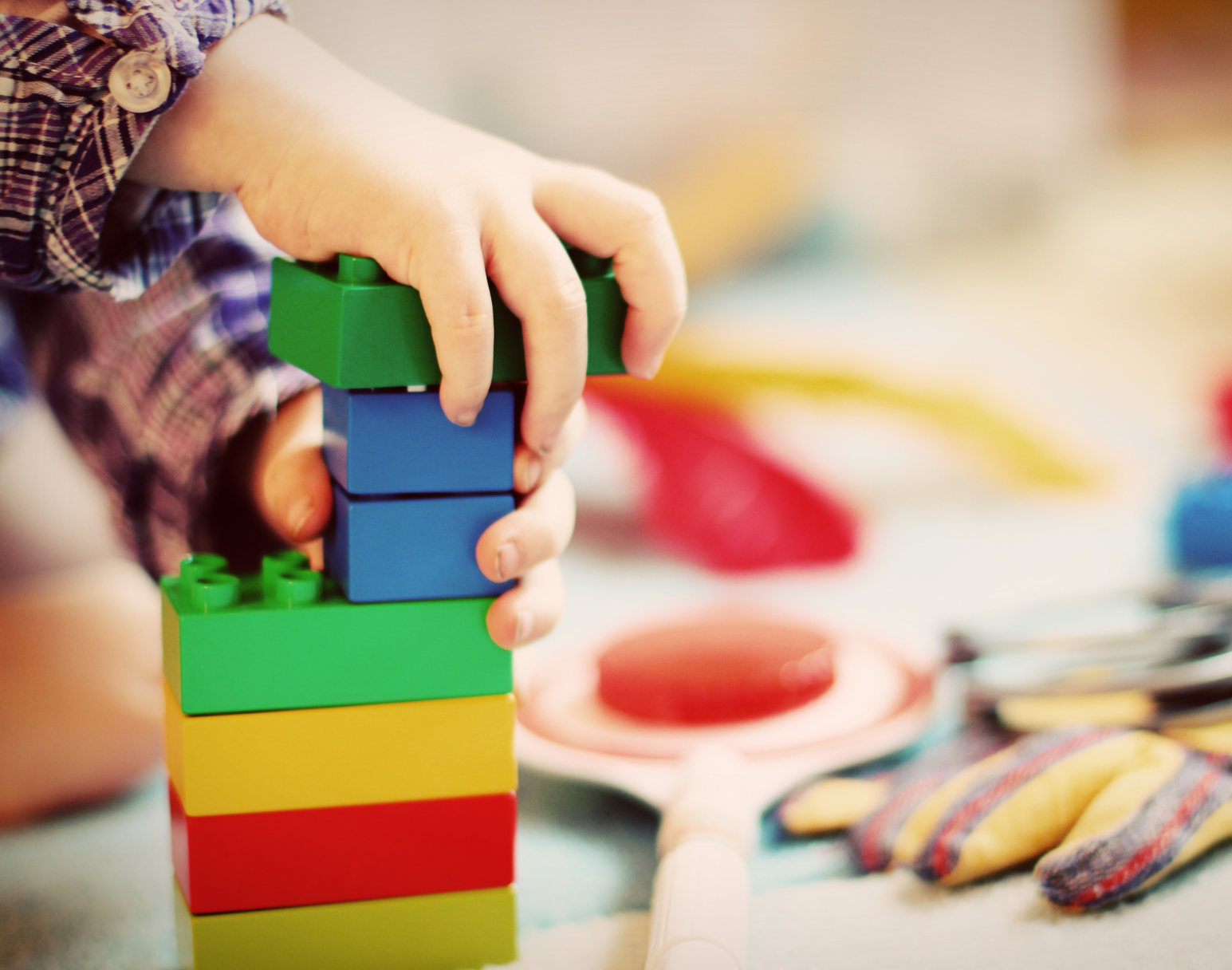
First, let’s define fine motor skills. Fine motor skills are the ability to use and move the small muscles in our hand and wrist to enable dexterity and precision of movement. These skills are essential to being able to functionally use our hands in small motor tasks, and they play a critical role in a child’s development and participation in their everyday tasks.
Fine Motor Skill Components
Within the umbrella of fine motor skills falls many different sub-areas. These various motor components influence strength, endurance, mobility, manipulation of items, and utilization of tools. We will discuss these areas in more detail below:
- Grasp
- Gross grasp — this is the use of all the fingers to squeeze around and hold an object. Tasks like handwriting, scissor-use, or opening containers require the whole hand to squeeze shut while also maintaining endurance to complete the entirety of the task(s). Gross grasp also plays a part in the development of web space and hand arch, which are also important for the tasks previously mentioned.
- Cylindrical grasp — commonly referred to as a gross grasp where the whole hand is in contact with an object and the thumb is curved around in opposition. This is needed in order to hold a hammer, broom, and baseball bat. This grasp requires adequate strength in the hand to be able to flex the fingers around the object and hold the object up.
- Pincer grasp — this is the pad-to-pad grip between the thumb and index finger which is important for picking up small objects like beads or cheerios, as well as many other fine motor tasks.
- Neat pincer grasp — similar to the pincer grasp, but this grasp uses the tip of the thumb with the tip of the pointer finger. This grasp is needed to pick up very small objects, such as a Perler bead or a needle.
- Tripod grasp — this is the optimal grasp for holding a writing utensil. It is the opposition of the thumb to the pad of the pointer finger and middle finger.
- Spherical grasp — this type of grasp is where the hand curves around a spherical or round object like a ball. Strength in the tiny muscles of the hand is critical in order to be able to use this type of grasp.
- Gross grasp — this is the use of all the fingers to squeeze around and hold an object. Tasks like handwriting, scissor-use, or opening containers require the whole hand to squeeze shut while also maintaining endurance to complete the entirety of the task(s). Gross grasp also plays a part in the development of web space and hand arch, which are also important for the tasks previously mentioned.
- Bilateral coordination: this is the ability of using both hands together to complete a task. This could look like having one hand stabilize while the other hand is moving, such as when you are writing on paper. Being able to integrate both hands requires integration of both sides of the brain to work together to complete the task. This skill plays a huge role in grooming, handwriting, dressing, feeding, and more. A child who tends to use one hand and/or appears clumsy/drops items, may have difficulty with bilateral coordination.
- In-hand manipulation: this skill allows an individual to manipulate objects within the hand. There are several different types of in-hand manipulation, which are further described below:
- Translation — this involves using your fingers to manipulate an object from your palm to your fingertips (palm-to-finger translation), such as when you have a handful of coins and you have to individually place each one in a piggy bank. Another form of translation is moving a small object from your fingertips to your palm (finger-to-palm translation), such as when you individually pick up coins and bring them to your palm to hold them.
- Shift — this involves movement using the pad of your fingers, such as when you pick up a pencil and shift your fingers down to grip the pencil before you begin writing.
- Rotation — this involves rolling an object using your fingertips. A common example of this is flipping a pencil around in your hand to use the eraser when writing.
- Strength: strength in the fingers and hand allow for increased functional participation in tasks, as well as increases endurance with tasks. Adequate strength in the hand is needed to open containers, manipulate clothing fasteners, open/close plastic bags, grasping/holding a cup of water to drink it, and much more.
- Opposition: this is the tip or pad of the thumb touching the tip or pad of each of the other fingers. This is critical for grasping small objects and positioning objects (like a pencil, button, etc.).
- Open web-space– a critical component of a successful opposition with grasping and manipulating a small object is having an open web space. This is the “O-shaped space between your thumb and pointer finger when you make an “OK” sign. For this space to happen, not only do the fingers need to touch, but the thumb needs to be able to rotate out.
- Wrist extension and stability: a slight “backward” bend of the wrist is needed for functional grasp of items. It also assists with positioning the fingers in the best position for opposition to the thumb. A stable wrist allows the fingers to manipulate objects without having to involve movement of the wrist as a compensation.
- Separation of the sides of hand: this is the ability of the precision side of your hand (thumb, pointer, and middle finger) to work with the power side of your hand (ring and pinky finger) to complete functional and skilled activities.
- Arch development– development of the arches of the hand is closely related to the separation of the two sides of the hand. When the power (ulnar) side is stabilized (or bent into a flexed position), then the precision (radial) side of the hand can be more precise and better manipulate objects. This separation allows for the stabilization of the MCP arch, which is needed for more precise use of the thumb. You may see this separation when a baby is crawling on the ulnar side of the hand while holding a toy in the radial side of the hand.
- Finger isolation: this is the ability to individually use each finger during a task. Examples include pointing with the index finger, counting with your fingers, as well as dexterity tasks like typing, tying your shoes, or managing tools.
- Precision: this is the refined and controlled movements of the hand. Precision is needed to carefully stack blocks, adequately use scissors (i.e., controlling the amount you need to open them), stringing beads, etc. Children who lack precision may often topple over a stack of blocks or appear to have choppy cuts/lines. Being able to have a graded control and precise grasp is needed for many everyday tasks.
- Core strength and stability: proximal stability leads to distal mobility. In other words, a strong and stable core allows for stronger fine motor skills distally. Engaging the core can lead to better motor control and dexterity in the hands. If a child has a weak core, this will likely affect bilateral coordination, in-hand manipulation, and eye-hand coordination.
- Shoulder stability: similar concept to the importance of core strength is that shoulder stability increases distal mobility in the hands as well. An easy way to engage the shoulder and increase shoulder strength is doing an activity on a vertical surface, therefore the child is required to raise their arm to complete the task.

Fun Activity Ideas!
1. Sidewalk chalk

Draw on the sidewalk with sidewalk chalk. The resistance from the chalk is an excellent way to build strength and endurance in the hand, as well as in the shoulder.
2. Coins

Have your child manipulate coins in hand to place into a “bank”.
3. Sponge play
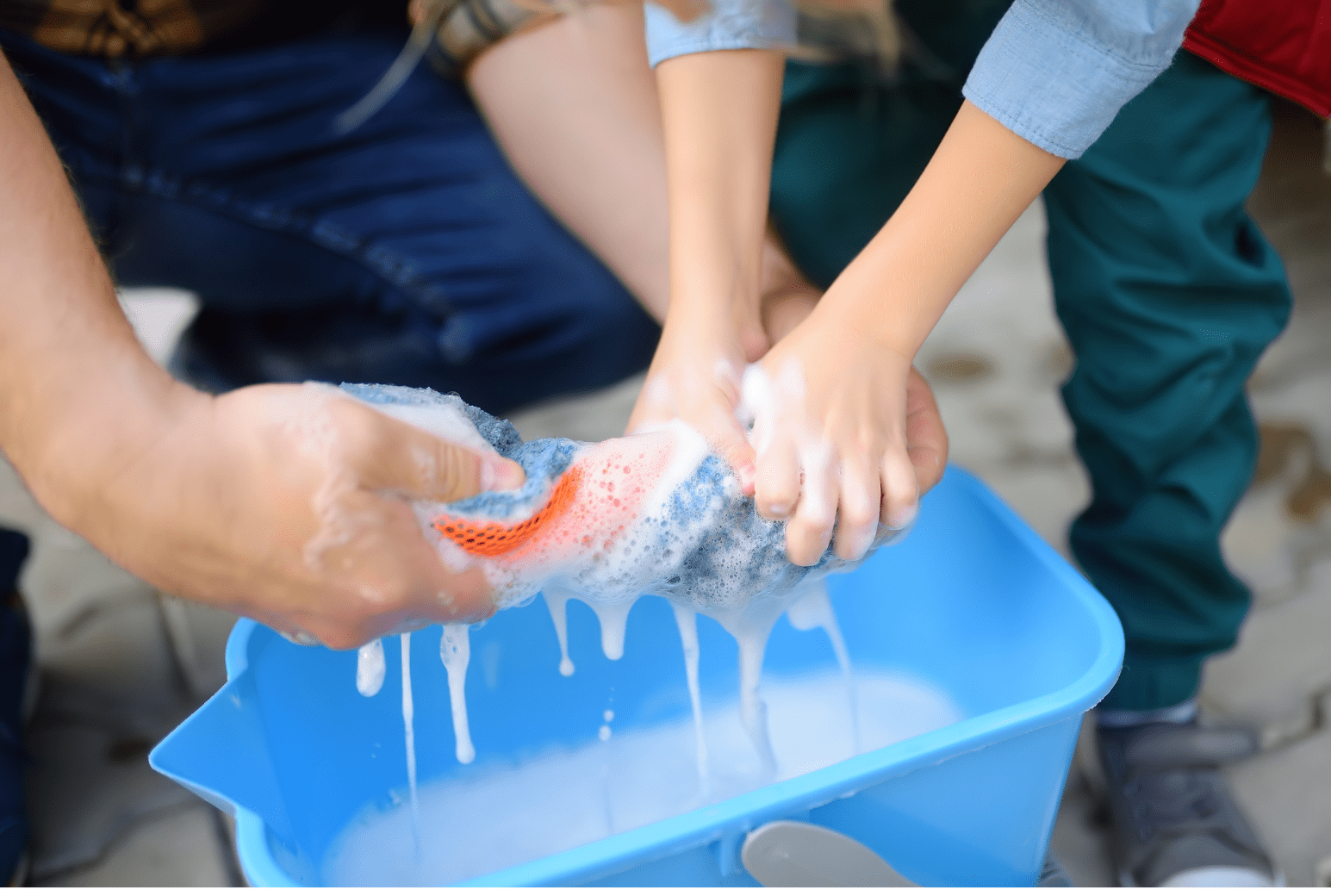
Play with sponges to build hand strength, as well as work on separation of the sides of hand.
4. Make Jewelry

Stringing beads is great for working on precision, pincer grasp, bilateral coordination, and opposition.
5. Play with Playdough

You can do so much with playdough! Cut it to work on scissor skills, use fork and knives to work on utensil use and grasp, mold it to work on strength/endurance, pinch it to work on pincer grasps, and so much more — get creative with it!
6. Munchie monster

Make a Munchie Monster with a tennis ball. This is great for bilateral coordination, strength and endurance, in-hand manipulation of beads/marbles, pincer or tripod grasps, and spherical grasp. You could also add cognitive components, such as having them count the beads.
We hope you feel confident that you can engage in these fun activities with your child with while helping them build stronger fine motor skills!
If you have any questions or need any help, give us a call!
~ Your SAB Team